

Easy Reads for Difficult Times
Autumn 2025 edition

October is here! And as the nights draw in, grab a blanket, pour yourself a hot chocolate (this ginger one is my favourite), and enjoy something from my latest batch of comfort reads. You can find the previous instalment below, in case you missed it earlier in the year.
My next post, in two weeks, will be on Dorothy Whipple; also upcoming is a deep dive into The Magician’s Nephew, and a list of my favourite books set in the run-up to WWII. To have your say about other books or authors you’d like me to cover in future, please fill out this (very short!) survey. Massive thanks to everyone who’s replied so far, I really appreciate all your comments.
Easy Reads for Difficult Times

As much as I love great literature, there are some days when reading anything at all feels like a challenge. That’s when you need something easy, something cheerful, something with minimal peril. The literary equivalent of hot buttered toast, if you will.
The Fortnight in September by R.C. Sherriff
Thanks to
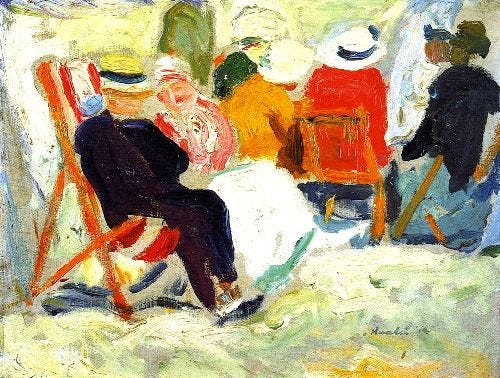
for introducing this one to me recently - I simply ate it up and finished the whole thing in a couple of hours. If you only know Sherriff from his brilliant - but depressing - WWI play Journey’s End then you may be surprised by this novel, which was published in 1931 and follows the Stevens family as they go on their annual holiday to Bognor Regis. That’s pretty much it, as far as the plot goes - it’s less a story than an intricate gaze into the interior life of the various family members. You might think that a detailed account of their holiday - the train journey, what they eat, what they wear - would be boring, like having to look at someone else’s holiday photos, and yet Sherriff makes it utterly compelling.It’s a cheerful read on the whole, as we see the family playing cricket on the beach, bathing, and enjoying the entertainments on the pier, but there’s an underlying poignancy, as this, their twentieth holiday together, acts as a spur for the family to look back over their lives. And while nothing much seems to happen on the surface, we see profound changes internally - especially for Dick, unhappy in his first job after school, and Mary, a shy girl on the verge of womanhood. And just as the September nights start to darken, and the holiday comes to its end, we sense this period of intimate, peaceful family life also drawing to a close.
There was nothing, at home in Corunna Road, to compare with this delicious hour of idleness. In the evenings at home there was the washing up to do— the breakfast to set, and all those unexpected little things that conspire in a home to keep you on your feet.
But what a difference— at “Seaview”! It took at least a couple of evenings to realise and enjoy it to the full. No washing up! No breakfast to set! —No shoes to clean! —Nothing to do but sit down and rest: nothing even to think about if you didn’t want to think. It was a lovely hour: the hour that did her more good than anything else on the holiday.
If you missed Ann Kennedy Smith’s recent posts on The Fortnight in September, you can find the first one here:

Miss Silver Comes to Stay by Patricia Wentworth
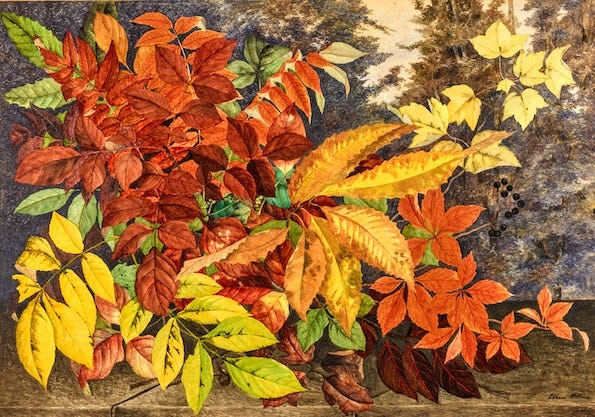
I’m always surprised that Patricia Wentworth’s novels aren’t more widely known - published from the 1920s right through to 1961, her books hit that sweet spot of what I would call cosy-ish crime - i.e. not the teacakes and kittens of modern ‘cosies’ but not too dark or graphic either. There’s usually a spot of gentle romance as well - think Miss Marple crossed with Mary Stewart. In this book Miss Silver, former governess turned detective, is making an autumn visit to a friend in the rural village of Melling. When the unpleasant James Lessiter, heir to Melling House, returns after a twenty year absence, tempers in the village are ruffled. But which of his disagreements could have been serious enough to lead to his murder?
This is the sixteenth out of an amazing 32 books in the Miss Silver series - but they’re all fine to read as standalone novels so no need to worry about getting through the others first.
‘Carr Robertson. He’s down here on a visit to his aunt Rietta Cray who brought him up. The girl’s staying there too. He brought her – just like that, you know, without a with your leave or by your leave – at least that’s what Catherine Welby says, and she always seems to know all Rietta’s affairs. Manners of the present day! I wonder what my father would have said if one of my brothers had just walked in and said. “This is Fancy Bell”.’
‘Fancy?’
‘That’s what he calls her – I believe her name is Frances. And I suppose we shall hear that they are engaged – or married!’ She gave a hearty laugh. ‘Or perhaps not – you never can tell, can you? You’d have thought once bitten, twice shy. Carr’s been married already – another of these flighty blonde girls. She ran off with someone, and died. It’s only about two years ago, and you’d have thought it would have made him more careful.’
‘She is very pretty,’ said Miss Silver mildly.
Mrs. Voycey snorted in the manner for which she had so often been reproved at school. ‘Men haven’t a particle of sense,’ she declared.

Dear Hugo by Molly Clavering
If gently humorous stories of village life are what you look for in a comfort read, then Molly Clavering is the author for you. Dear Hugo is told in the form of letters from protagonist Sara Monteith, as she settles into a new life in the village of Ravenskirk in the Scottish Borders (where most of Clavering’s novels are set). The book lovingly charts the changes of the seasons as well as village life with its neighbours, tea parties, and the grand festivities for the Coronation - and with the guardianship of her young relative Arthur, and the arrival of an unexpected poodle puppy, Sara is kept busier than expected!
Molly Clavering was great friends and neighbours with that other great chronicler of village life, D.E. Stevenson - so if you enjoyed Miss Buncle’s Book, I would definitely recommend giving Dear Hugo a try. All Clavering’s novels have recently been republished by the wonderful Dean Street Press, and they’re available on Kindle for a mere £2.99 which I think is a bargain.
But there is something about gathering wild fruits which rouses enthusiasm. I suppose it is a sense of treasure-hunting, and it fires almost everybody. I started to pick, pushing my way through impossibly small spaces recklessly in search of more and better sloes. At least there was no stooping involved, and the sunshine fell in bright patterns between the twisting black branches and small thickly set leaves, and the air was fresh, with the faint nostalgic hint of distant garden bonfires which is so essential a part of autumn. Quite suddenly Elizabeth spoke, startling me so that I jumped, a fatal move in those surroundings. A malignant branch above my head instantly seized my hair with every thorn available, and there I was caught, like Absalom, or like Abraham’s ram, unable to free myself.
“What’s wrong?” asked Elizabeth. Her face peered at me through a tangle of twigs.
“I’m caught by the hair,” I said angrily. “Do stop glaring at me like the Cheshire Cat, Elizabeth, and come and undo me!”
Persuasion by Jane Austen
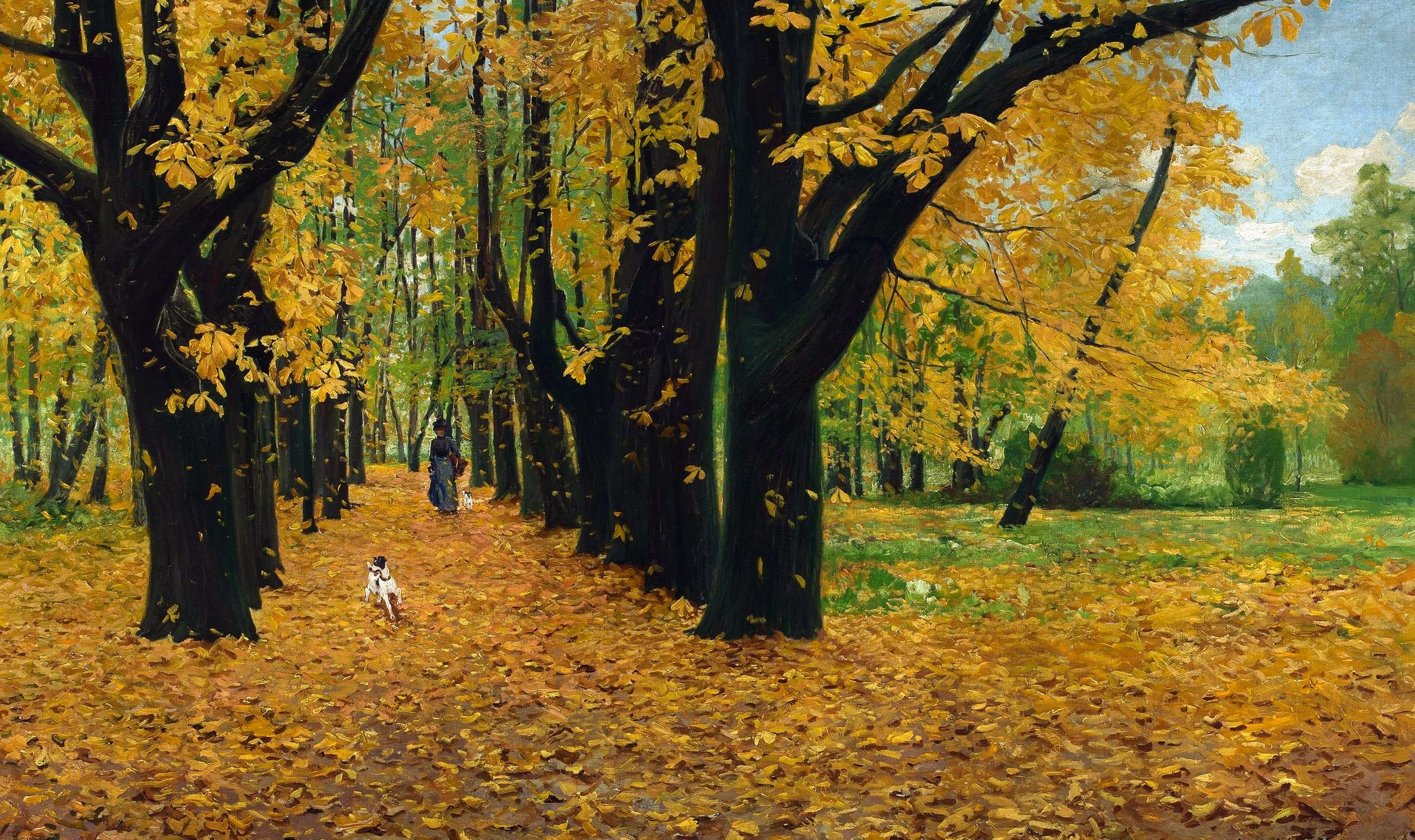
Austen’s last - and greatest - novel has for its heroine is not a sparkling Lizzy or melodramatic Catherine but gentle, refined Anne Elliot, past her bloom and on the shelf at twenty-eight, and disregarded by her egotistical sisters and vain father. When the dashing Captain Wentworth, Anne’s spurned lover, appears on the scene after eight years in the navy, he declares her ‘so altered he should not have known her again’ and promptly pursues a flirtation with the lively Muswell sisters. But after a disastrous accident at Lyme Bay, will Captain Wentworth begin to realise Anne’s worth? My favourite of Austen’s books, it’s the perfect read for this time of year (that nut-gathering scene! The bracing sea walks at Lyme! Mr Wentworth’s new umbrella!)
I have made it sound like a ditsy romance novel but of course, this is Austen, so it’s so much more than that. But if you’ve read it already then you don’t need me to tell you anything, and if you haven’t read it - well, what are you waiting for? Go and find a copy straight away, you won’t regret it.
(PS - if you want to watch the film, it has to be the 1995 version starring Amanda Root and Ciaran Hinds. No substitutions will be accepted.)
“Very well,” said Elizabeth, “I have nothing to send but my love. Oh! you may as well take back that tiresome book she would lend me, and pretend I have read it through. I really cannot be plaguing myself for ever with all the new poems and states of the nation that come out. Lady Russell quite bores one with her new publications. You need not tell her so, but I thought her dress hideous the other night. I used to think she had some taste in dress, but I was ashamed of her at the concert. Something so formal and arrangé in her air! and she sits so upright! My best love, of course.”
“And mine,” added Sir Walter. “Kindest regards. And you may say, that I mean to call upon her soon. Make a civil message; but I shall only leave my card. Morning visits are never fair by women at her time of life, who make themselves up so little. If she would only wear rouge she would not be afraid of being seen; but last time I called, I observed the blinds were let down immediately.”
You can download Persuasion for free from Project Gutenberg here.
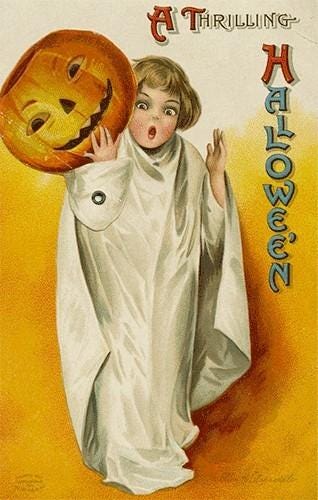
Halloween Party by Agatha Christie
When I’m struggling to concentrate on something complicated, I always come back to Christie. If you have only seen the recent heinous film version of this, A Haunting in Venice (thanks for nothing, Kenneth Branagh), you may be surprised to find out that the book is not set in a haunted palazzo, does not involve Poirot setting out to debunk a famous spiritualist medium, and no-one is found impaled on a statue. Instead the action takes place in an English village, where a child is found drowned in an apple-bobbing bucket at a Halloween party. Mrs Oliver promptly calls in Poirot to investigate - and when another child is found dead, it becomes a race against time to stop the murderer before they kill again.
Christie often gets categorised as a cosy writer, but this is a misnomer - although less obviously spooky than A Haunting in Venice, there are sinister undertones to this novel which sometimes go unnoticed. Still, I’d consider it a perfect book to read while curled up by the fire on a cold night.
“What happened?” said Poirot. His voice was sharp.
“That’s where she was found,” said Mrs Oliver. “Someone, you know, someone had shoved her head down into the water with the apples. Shoved her down and held her there so that she was dead, of course. Drowned. Drowned. Just in a galvanised iron bucket nearly full of water. Kneeling there, sticking her head down to bob at an apple. I hate apples,” said Mrs Oliver. “I never want to see an apple again...”
Poirot looked at her. He stretched out a hand and filled a small glass with cognac.
“Drink this,” he said. “It will do you good.”

Still Life by Louise Penny
And finally, something more modern for you. This is the first in Penny’s series of novels about Inspector Gamache, of the Sûreté du Quebec. When a local artist is found dead in the woods over Thanksgiving weekend, Gamache heads off to Three Pines to investigate. But is everything in the village as idyllic as it appears on the surface? This police procedural is another one that, for me, finds the right balance between cosy and realistic - and it’s the perfect book to read at this time of year thanks to the descriptions of autumn leaves, bonfires, and cosy cups of hot chocolate in front of a roaring fire at Olivier and Gabri’s antiques shop/bistro. There’s a claim about the village that ‘anyone fortunate enough to find it once usually found their way back’ - and luckily, if you enjoyed this book, there’s another eighteen(!) in the series to keep you busy.
Carved pumpkins squatted on each step up to the sweeping veranda of the B&B. Inside, worn oriental rugs and overstuffed chairs, lights with tassels and a collection of oil lamps gave Gamache the impression of walking into his grandparents’ home. To add to the impression, the place smelled of baking. Just then a large man in a frilly apron that said, ‘Never Trust a Skinny Cook’ made his entrance through a swinging door. Gamache was startled to see more than a passing resemblance to his grandmother.
Gabri sighed hugely and put a wan hand up to his forehead in a gesture not often seen this side of Gloria Swanson.
‘Muffins?’
The question was so unexpected even Gamache was thrown off guard.
‘Pardon, Monsieur?’
‘I have carrot, date, banana and a special tribute to Jane called “Charles de Mills”.’ And with that Gabri disappeared and reappeared a moment later with a platter holding rings of muffins marvelously decorated with fruit and roses.
Thank you so much for reading! Do you have any autumn favourites to recommend? What’s your hot drink of choice? Tell me in the comments!
And if you enjoyed it please leave a ‘like’ on the heart below.
R C Sherrif's 'Green Gates" is also a splendid book, about a husband and wife coming to terms with life after retirement. I loved it.
Lovely! I did not know about Molly Clavering so thank you for that!
The Louise Penny books - especially the earlier ones when they are less - I don’t know, grandiose? Portentous? - are a bit of an obsession in this household. I long to be in Three Pines drinking cafe au lait. My husband’s best friend from college lives in Montreal (in fact, they both spent some months post university working as lumberjacks, living in a log cabin!) and knows the area well. Determined to visit some day.
Oh - and thinking of seasons, I find myself visiting Miss Read regularly throughout the year. I love her most at Christmas but as so much is about the rhythms of a country school, she is excellent this time of year too. Cosy, yes, but very sharply observed and funny.